

In September 1944, residents of Mattoon, Illinois, reported sweet smells, weakness, burning sensations and suspicious people near their homes. The local newspaper gave the supposed intruder a name before an assailant or chemical had been established. The resulting “gasser” case is best approached through the changing reports, rather than by assuming that every complaint had one cause.


Reading the contemporary record
Three original issues of the Daily Journal-Gazette, preserved by Eastern Illinois University’s Localities project, show how the account developed. Their mastheads are dated 2, 6 and 11 September 1944. These scanned newspapers provide contemporary reporting, including named witnesses and statements attributed to police. They are not themselves laboratory reports or clinical records.
The dates printed on the scans matter because the project’s accompanying bibliography does not consistently match them. This article follows the visible mastheads. It also separates a report’s publication date from the night described: the first issue refers to an experience on the preceding Friday. No later upload date is being used as an incident year.
The Kearney report
The 2 September issue led with an alleged anaesthetic prowler. Mrs Kearney told the newspaper that, shortly after eleven on Friday night, she noticed a sickening sweet odour in a bedroom. At first she associated it with flowers outside. As it strengthened, she said that she felt unable to move her legs and lower body.
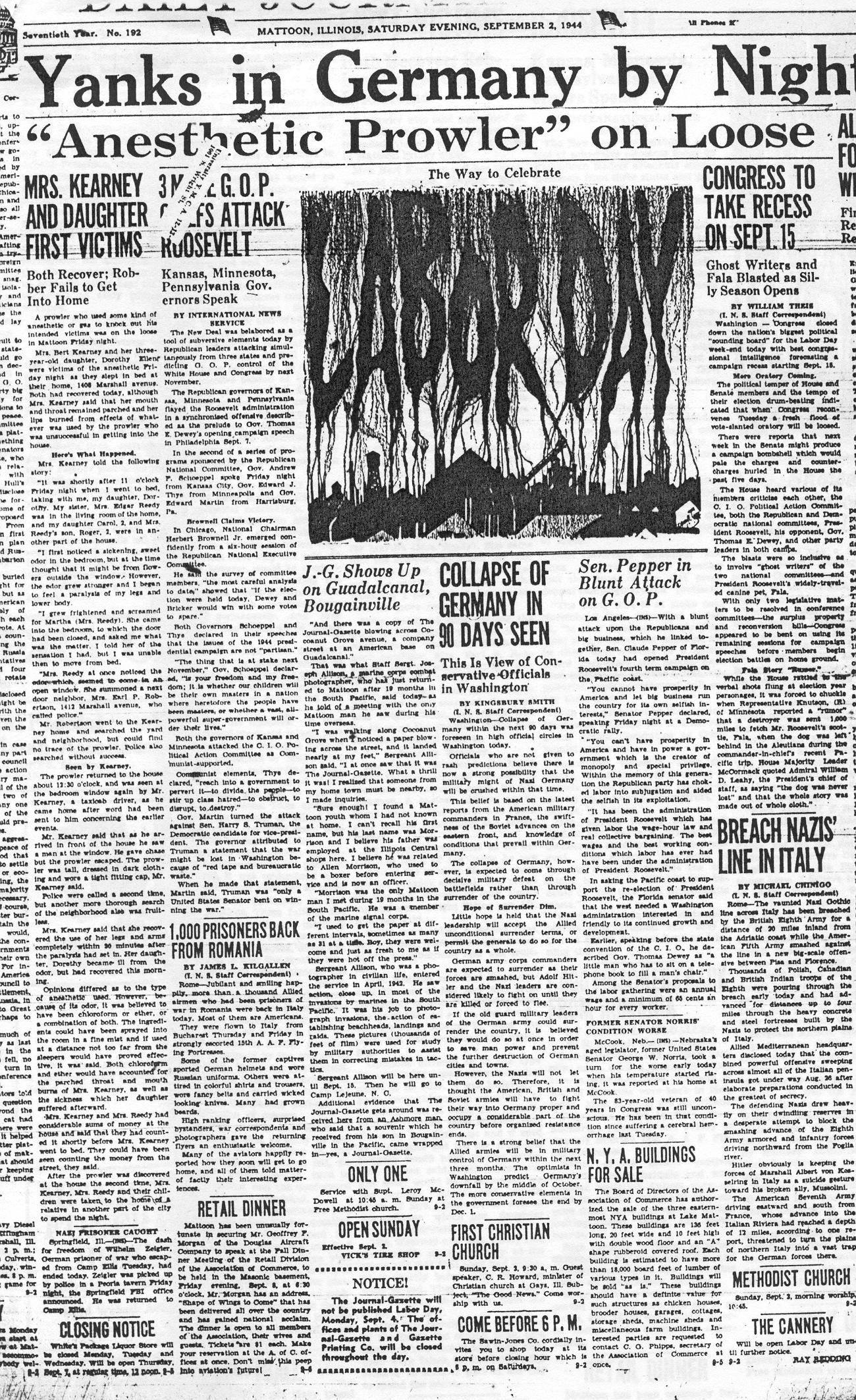
Her young daughter was also described as affected. Kearney’s sister, who had been elsewhere in the house, reportedly noticed nothing until she was called into the bedroom and encountered the smell. A neighbour was summoned and police searched without finding anyone. The article said Kearney and her daughter recovered; a parched mouth and throat were among the after-effects she described.
Kearney’s husband later reported seeing a man at a bedroom window after returning home. He gave chase but did not catch him. That was a reported sighting of a possible prowler, rather than an observation of someone administering a chemical. The distinction leaves open whether the man, the smell and the symptoms were causally connected.
The newspaper canvassed opinions about substances that might have been used, but these were suggestions. Its headline and robbery framing went further than the evidence available in the same column. Neither a named chemical nor an identified offender emerged from the police searches described there.
A cloth and a proposed test
The 6 September issue added a materially different complaint from Mrs C. Cordes. She reported finding a white cloth near her door, smelling it and experiencing a sickening sensation, burning around her mouth and throat, and weakness or paralysis. She said her husband helped her inside and called a physician.
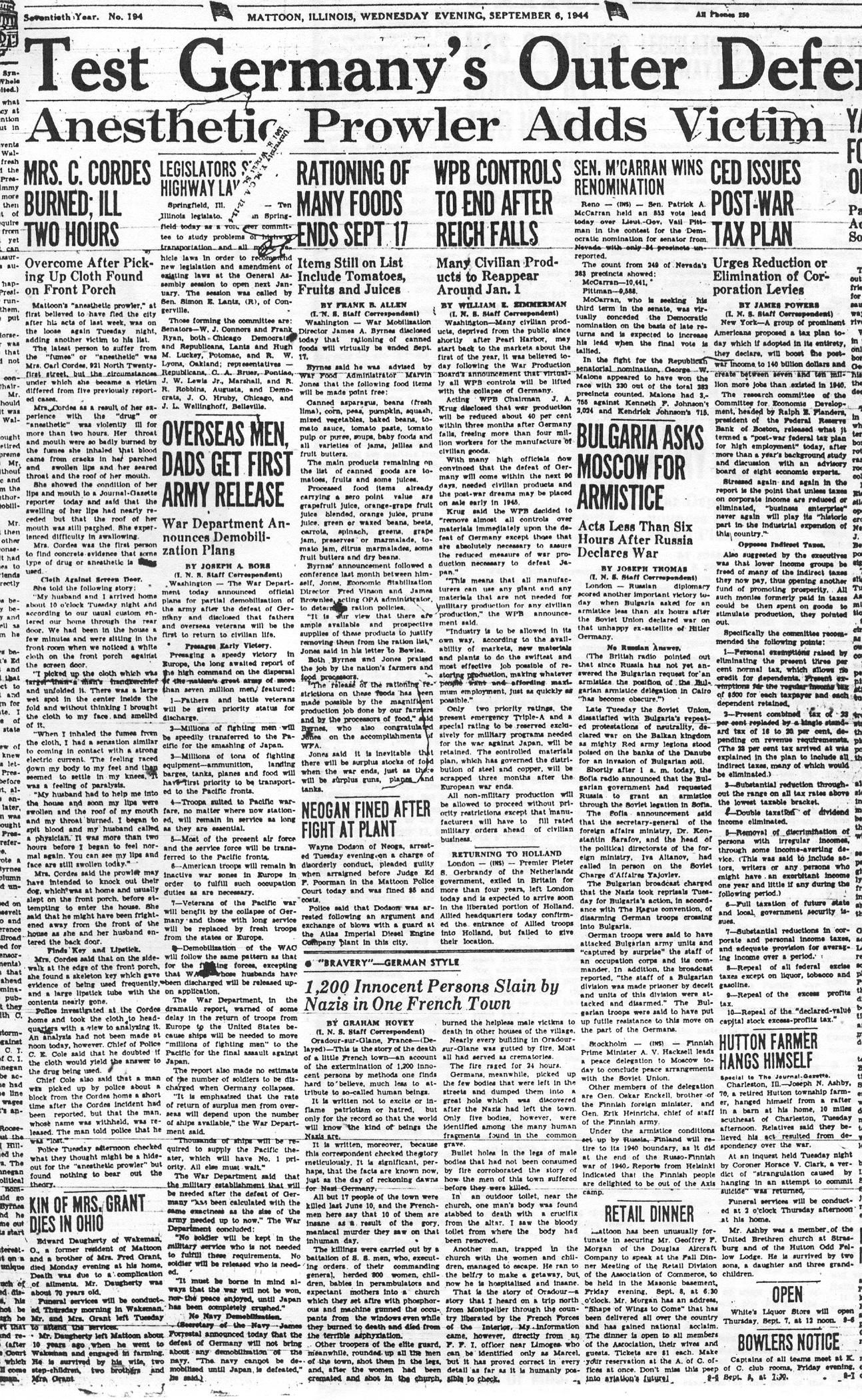
The reporter described visible effects around her lips and recorded her account of swelling and difficulty swallowing. The report therefore contains more than a passing rumour, but it still does not establish which substance caused the symptoms. Cordes herself suggested that material might have been left to overcome someone opening the door. That proposed intention remained her interpretation.
Police took the cloth to a chemist. Crucially, the newspaper said an analysis had not yet been made. An object submitted for testing is a potential source of evidence; it is not a positive test result. This review has not obtained a completed laboratory report identifying an anaesthetic on that cloth.
Other objects and police enquiries appeared in the same story, including a key, lipstick and a man who had been detained and released. The paper said police did not regard that man as responsible. None of those details should be turned into an identified culprit or a demonstrated chemical delivery device.
The changing tone by 11 September
By 11 September, the front page described a calmer city after a busy weekend of calls. The article still recorded people saying they had smelled an ether-like substance, but it also raised rumour, imagination and mistaken reports. A changing editorial interpretation did not retrospectively measure every earlier exposure.
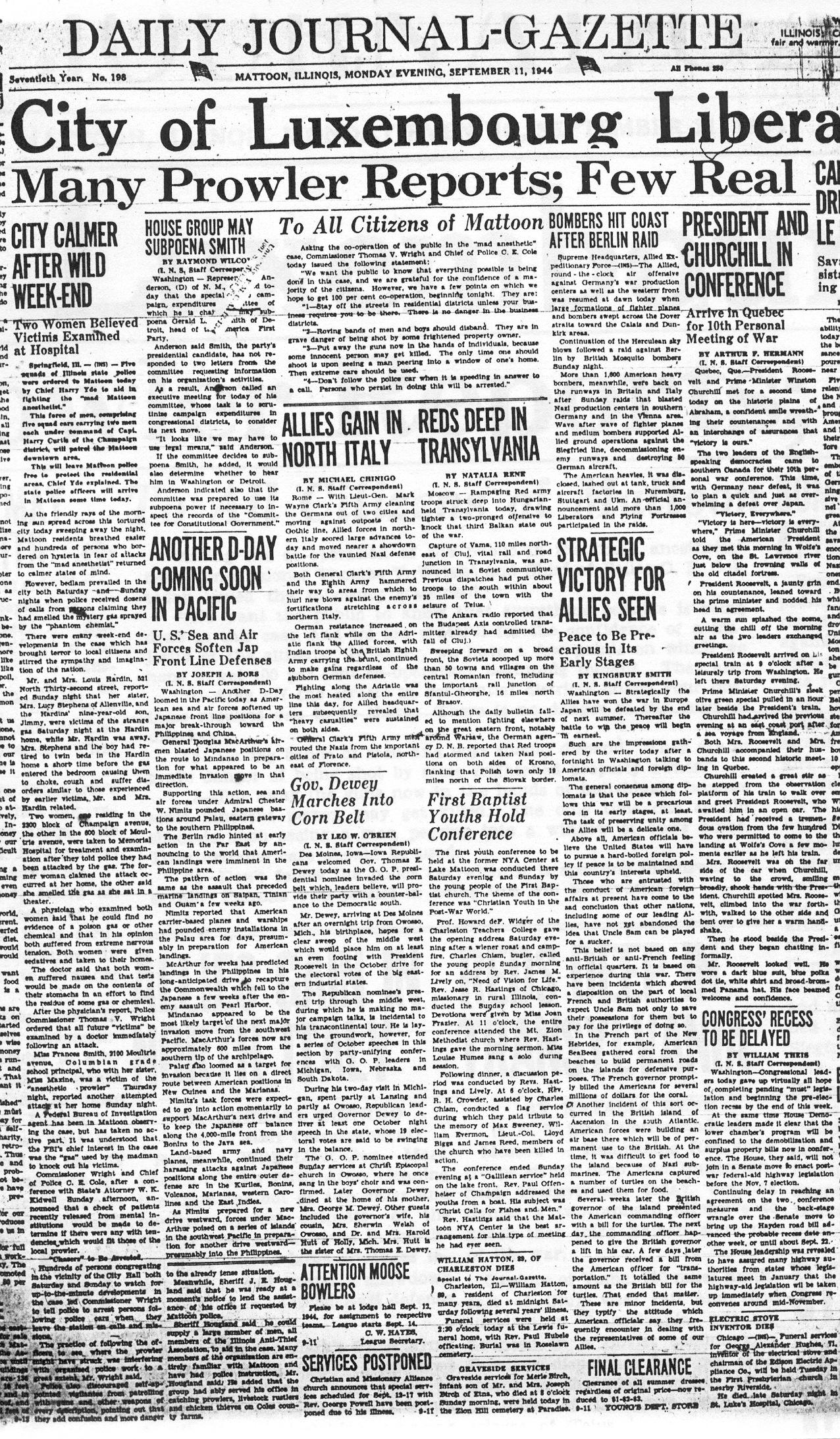
Two women were taken to hospital after separate reported experiences. The newspaper said the examining physician found no evidence of poison gas or another chemical and considered fright a possible explanation for their condition. It said tests on the women’s stomach contents were planned in an attempt to find a residue of gas or another chemical. A planned test is not a negative laboratory result, and the physician’s examination did not identify a cause for every complaint or analyse the Cordes cloth.
Another reported incident involved a housewife and a prowler. According to the newspaper, an FBI investigator who attended could find neither the woman nor the supposed attacker and was troubled by the public alarm. The contemporary record thus includes failures to corroborate particular calls alongside the earlier detailed complaints.
Police warnings and public reaction
A notice signed by Commander Thomas V. Wright and Police Chief C. E. Cole asked residents to cooperate and said police were doing what they could. It discouraged crowds and roaming armed groups, warned about the danger of shooting an innocent person, and threatened action against false calls. These are direct signs of the practical burden created by the alarm.
The notice does not show that police secretly knew the identity of a gasser. Nor does an overwhelmed response prove that no one experienced a real smell or illness. It documents a community problem in which symptoms, suspicions, publicity and potentially dangerous civilian searches had become entangled.
Outcome: Insufficient evidence
The reviewed material establishes a contemporary wave of complaints and competing interpretations. It does not establish a single chemical, an offender or one demonstrated cause covering all reports. The absent completed cloth analysis and the limited scope of the reported hospital findings are important reasons for this classification.
A social or psychological explanation may account for some reports, but calling the entire episode a proved instance of mass suggestion would require evidence beyond these three issues. Equally, treating every complaint as an attack by one elusive criminal would join events whose common cause was never demonstrated in the material reviewed here. The case remains a historical record of reported experiences and an escalating public alarm.
Location, imagery and source limits
The map uses a broad Mattoon city reference from the US Census Bureau’s Illinois place gazetteer. It identifies the town rather than private homes, suspected attack positions or a visitor route. The depot photograph supplies later town context and does not identify an incident site.
The source review covered the relevant articles and public notice in the three linked original scans. It did not include original medical files, an original police case file or a completed chemical analysis. Donald M. Johnson’s later 1945 study was located bibliographically, but its full text was not reviewed for this article. Source and outcome assessment: 13 November 2026.